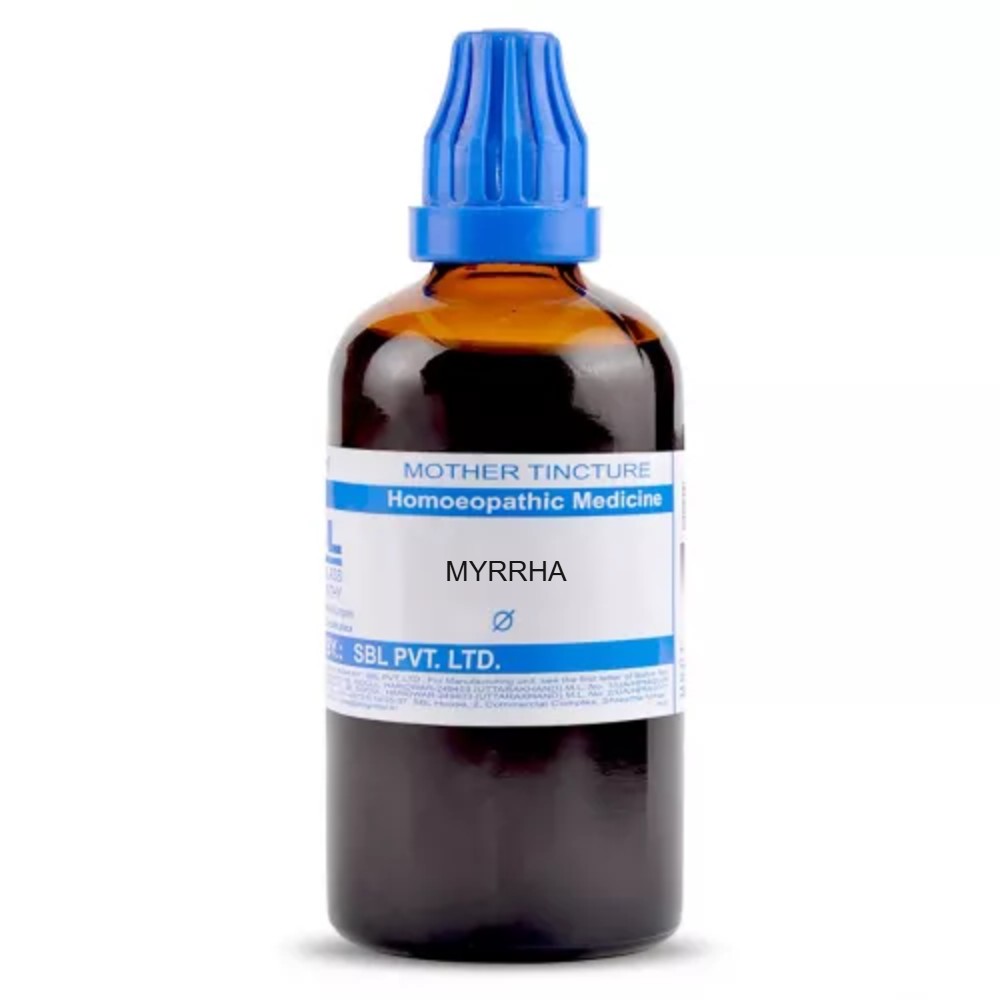
SBL Myrrha (Commiphora Molmol) Mother Tincture Q (100ml)
You save ₹148
Inclusive of all taxes
- 100% genuine
- Sealed pack
- Secure payment
Delivery and returns
- Free delivery above ₹499For smaller orders the delivery charge is shown at checkout.
- Delivery dateEnter your pincode above to see when it will arrive.
- Easy returnsSee our returns and refunds policy.
- Need help?Chat with us on WhatsApp
Product details
SBL Myrrha (Commiphora Molmol) Mother Tincture Q (100ml) is an alcohol-based tincture prepared from myrrh gum resin. Homeopathic literature mentions it for sore, spongy gums and a sore mouth.
Introduction
SBL Myrrha (Commiphora Molmol) Mother Tincture Q (100ml) is prepared from myrrh, the aromatic gum resin of a small, thorny, spreading tree of the incense family that grows in the dry, rocky country of north-eastern Africa and the Arabian Peninsula, especially Somalia, Ethiopia, Yemen and Oman. The tree reaches about three metres, with knotted, pale, papery branches armed with sharp spines, small, three-parted leaves and tiny, reddish flowers. When the bark is cut or splits naturally in the heat, a pale yellow, oily sap seeps out and hardens in the air into reddish-brown tears, which are gathered by hand.
Myrrh is among the oldest traded aromatics in the world. The Egyptians used it for embalming and in perfumes, and a mixture called kyphi, burned as incense, included it. It is one of the three gifts of the Magi in the Christian Gospel, along with gold and frankincense, and it features in the Hebrew Bible as an ingredient of the holy anointing oil. The name myrrh comes from a Semitic root meaning bitter, and the resin does have a bitter, pungent taste with a warm, balsamic scent. The closely related guggul of India comes from another Commiphora tree.
Homeopaths made a tincture from the resin in strong alcohol and recorded a picture centred on the mouth, the gums and the throat. The resin is slow to dissolve and gives a reddish-brown tincture that turns cloudy when mixed with water. This 100ml bottle is a typical clinic size, and the description below is based on the traditional record of the resin.
Key Benefits
Traditional homeopathic references link Myrrha with these points, at symptom level:
- Sore, soft, spongy gums that bleed easily when brushed
- A sore mouth and a coated tongue with a bitter taste
- A rough, sore throat with a feeling of dryness
- A dry, tickling cough, as older books note
These lines describe traditional use only and no outcome is promised. Mouth or gum complaints that last need a dentist or doctor.
Composition
- Myrrha (Commiphora molmol, myrrh): the gum resin used for the tincture, traditionally linked with sore gums and a sore mouth.
- Ethanol and water: the alcohol-based liquid in which the resin is dissolved.
The letter Q marks a mother tincture, the first solution before any dilution. The resin is ground and dissolved in strong alcohol, giving a clear, reddish-brown liquid with a balsamic scent.
Why Choose
Myrrh comes from more than one tree, so the botanical name on the label shows which resin is used. SBL prints it in full.
- The myrrh of the Magi and the Egyptians, named exactly
- Made by a long-established homeopathic firm
- A practical 100ml bottle
It is separate from guggul, from frankincense and from myrrh essential oil.
How to Use
A registered homeopath should decide how this tincture is used, and the carton lists the printed directions. It is not a mouthwash to be used neat. Keep the bottle standing with its cap tight, in a cool cupboard away from flames, because the liquid is flammable.
FAQs
Why is myrrh called bitter?
The word myrrh derives from a Semitic root meaning bitter, from the taste of the resin.
How is myrrh gathered?
The resin seeps from cuts in the bark and is collected once hardened.
Is it related to guggul?
Yes. Both come from trees of the genus Commiphora.
Does this tincture contain alcohol?
Yes. The resin is dissolved in ethanol, so anyone barred from alcohol should avoid it.
Is it suitable in pregnancy or childhood?
Myrrh is traditionally avoided in pregnancy, and any use in a child needs a registered homeopath’s advice.
When does a gum problem need a dentist?
If there is swelling, pain, pus or bleeding that lasts, see a dentist.
Safety Information & Precautions
- Myrrh tincture should be taken only as the carton describes or a registered homeopath advises.
- With ethanol as its base, it calls for a doctor’s opinion first from anyone pregnant, breastfeeding or abstaining, and from parents considering it for a child.
- Let your doctor see a list of your medicines, since resin may interact with some of them.
- Gum pain, swelling or a mouth sore that lasts needs a dentist or doctor.
- The liquid is flammable; store it away from flames, cool and out of children’s reach.
Final Thoughts
SBL Myrrha (Commiphora Molmol) Mother Tincture Q (100ml) is a tincture of the bitter resin given to the infant in the Gospel story. Follow the label, take professional advice and see a dentist or doctor for gum complaints that last.