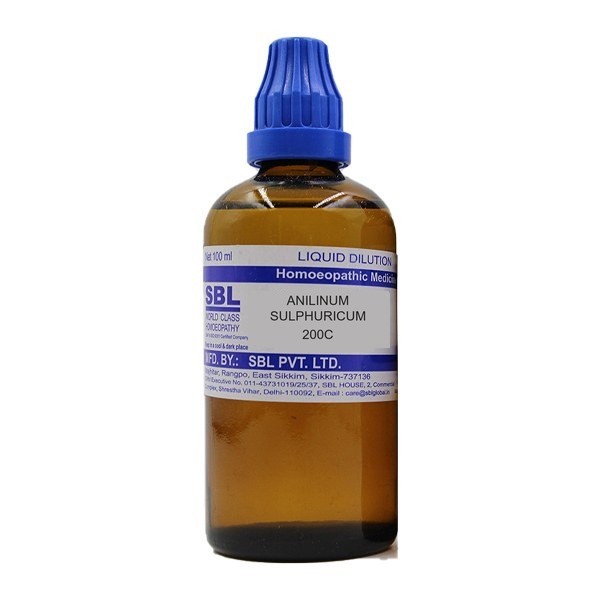
SBL Anilinum Sulphuricum 200C 100ml
You save ₹58
Inclusive of all taxes
- 100% genuine
- Sealed pack
- Secure payment
Delivery and returns
- Free delivery above ₹499For smaller orders the delivery charge is shown at checkout.
- Delivery dateEnter your pincode above to see when it will arrive.
- Easy returnsSee our returns and refunds policy.
- Need help?Chat with us on WhatsApp
Product details
SBL Anilinum Sulphuricum 200C is a 100ml homeopathic liquid dilution of aniline sulphate, a salt tied to the history of synthetic dyes. Written homeopathic literature on it is limited, so a physician's advice is the best guide.
Introduction
SBL Anilinum Sulphuricum 200C 100ml is a homeopathic liquid dilution of aniline sulphate, the salt formed when aniline, an oily organic liquid, is combined with sulphuric acid. Aniline was first obtained from the indigo plant in 1826 by the German chemist Otto Unverdorben, and its name comes from anil, the Portuguese and Arabic word for the indigo plant, so the compound carries a botanical memory in its title.
Anilinum Sulphuricum 200C has been diluted many more times than 30C, so it is best chosen by a homeopathic physician for the individual. Written homeopathic literature on Anilinum Sulphuricum is limited, so a registered homeopathic physician is the right person to say whether it may suit you.
Key Benefits
Because little is recorded about this remedy, the points that matter are about the product and its source:
- One defined chemical salt, named plainly on the label
- A compound with a notable place in the history of colour chemistry
- A remedy for practitioners who prescribe the aniline group by name
- Offered in 30C and 200C, in a 100ml bottle
Composition
- Anilinum Sulphuricum 200C: aniline sulphate, a salt of aniline and sulphuric acid, prepared by homeopathic dilution and succussion.
The salt is diluted and succussed according to homeopathic pharmacy methods in a dispensing alcohol base.
Why Choose
In 1856, a young English chemist named William Perkin was trying to make a medicine from aniline when he produced a vivid purple dye instead. His mauve launched the synthetic dye industry, and aniline compounds became the base of a whole palette of colours in the decades that followed. Those colours reached India as well, where synthetic dyes gradually replaced many plant dyes in the cloth trade.
The SBL 100ml pack suits practitioners who keep the unusual chemical remedies and want them labelled with their exact Latin names.
- A single salt, clearly named
- Not interchangeable with other aniline-based remedies
- Two potencies available
Anyone reading the label should note the word Sulphuricum, which separates this salt from other aniline compounds such as Anilinum itself. The sulphate is the form used because it is a stable, crystalline salt that dissolves easily, and that is why pharmacists chose it over the oily base.
How to Use
Follow your homeopathic physician or the label for the amount and frequency, which depend on the person. A clean mouth, with no recent coffee, mint or tobacco, is the traditional preparation before taking a homeopathic remedy.
Keep the bottle tightly closed, away from direct sunlight, heat and strong odours. Speak to your doctor if symptoms continue or get worse.
FAQs
What is aniline?
It is an oily organic liquid, first obtained from indigo, that is the starting point for many dyes and other chemicals.
Is the bottle a dye?
No. It is a homeopathic dilution in alcohol and does not colour anything.
Is the original chemical hazardous?
Aniline and its salts are industrial chemicals that should only be handled by trained people. A homeopathic potency has been diluted many times, but it should still be used only as directed.
Which Anilinum Sulphuricum potency should I choose?
Choose the potency your physician named. The 30C and 200C hold the same salt at different dilution levels.
Does this product contain alcohol?
Yes. Liquid dilutions have an alcohol base, so please consider this if you avoid alcohol and speak to your physician if you are unsure.
Is it a plant remedy because aniline came from indigo?
No. Modern aniline is made in the laboratory, and this remedy comes from a chemical salt, not the indigo plant.
Safety Information & Precautions
- Use only as directed on the label or by a registered homeopathic physician.
- Do not exceed the directions given to you.
- This is an alcohol-based liquid. Consult a doctor before use during pregnancy or breastfeeding, for children, or if you avoid alcohol.
- Tell your doctor about any ongoing medicines before using it.
- Never use it in place of a medicine prescribed for you, and see a doctor promptly for serious, sudden or persistent symptoms.
- Keep out of reach of children and store in a cool, dry place.
Final Thoughts
SBL Anilinum Sulphuricum 200C 100ml is a homeopathic dilution of a salt that helped launch the synthetic dye age. As the written homeopathic literature on it is limited, choose it on a registered homeopathic physician’s advice and follow the label.