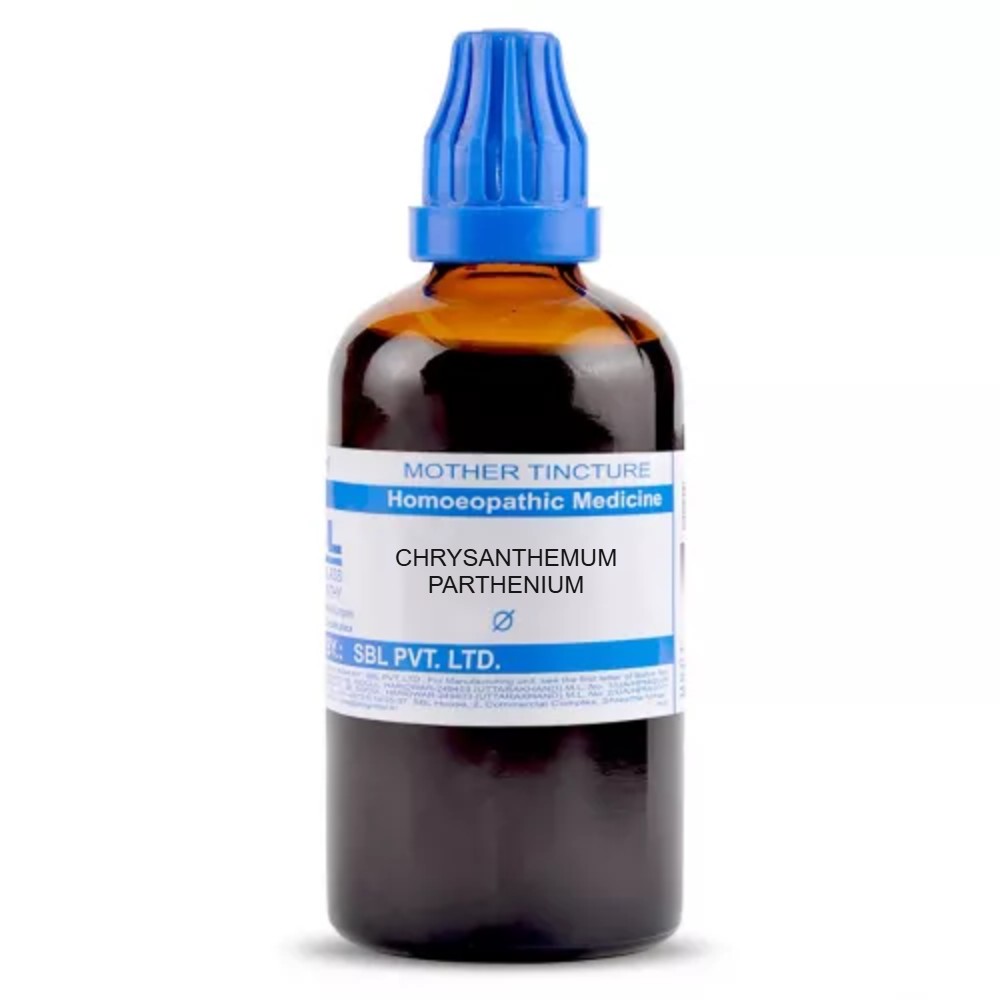
SBL Chrysanthemum Parthenium Mother Tincture Q (100ml)
You save ₹60
Inclusive of all taxes
- 100% genuine
- Sealed pack
- Secure payment
Delivery and returns
- Free delivery above ₹499For smaller orders the delivery charge is shown at checkout.
- Delivery dateEnter your pincode above to see when it will arrive.
- Easy returnsSee our returns and refunds policy.
- Need help?Chat with us on WhatsApp
Product details
SBL Chrysanthemum Parthenium Mother Tincture Q (100ml) is an alcohol-based tincture prepared from feverfew. Written homeopathic literature about this remedy is limited.
Introduction
SBL Chrysanthemum Parthenium Mother Tincture Q (100ml) is prepared from feverfew, a bushy, aromatic, short-lived perennial of the daisy family native to south-eastern Europe and the Caucasus, and naturalised in gardens, walls and waste ground across Europe, North America and many other regions. Botanists now call it Tanacetum parthenium, and the older name Chrysanthemum parthenium is still found on homeopathic labels. The plant grows to about sixty centimetres, with light green, deeply cut, feathery leaves and a mass of small, white-petalled, yellow-centred flower heads that look like miniature daisies. Crushed leaves give off a sharp, bitter, camphor-like smell.
The common name feverfew comes from the Latin febrifugia, meaning a fever driver, and country people in Europe grew the herb in cottage gardens for centuries. The English herbalist John Gerard wrote in 1597 that it was a remedy for those with giddiness in the head. In the twentieth century, feverfew leaves became widely known as a traditional herb for headache, and they are still eaten fresh, in small amounts, by some people in the garden. Bees avoid the plant, which is why gardeners sometimes plant it as an edging that is left alone by insects.
Written homeopathic literature on Chrysanthemum Parthenium is limited, so this description keeps to the plant and the way the tincture is prepared. The fresh flowering herb is extracted in alcohol, and the 100ml bottle suits practitioners who keep a full range of European herb tinctures.
Key Benefits
Feverfew has a very short entry in homeopathic books, so the points below describe the product:
- Fresh feverfew herb steeped in alcohol, with no additives
- The tincture of a daisy-flowered cottage-garden plant
- Prepared by the usual homeopathic pharmacy methods
- A bottle sized for dispensaries that stock European herbs
Composition
- Chrysanthemum parthenium (Tanacetum parthenium, feverfew): the fresh flowering herb used for the tincture.
- Ethanol and water: the alcohol-based liquid used for extraction.
The letter Q marks a mother tincture, the first extract before any dilution. The leaves and flower heads are chopped and covered with alcohol, which takes on a green colour and a bitter, camphor-like scent.
Why Choose
Chrysanthemum covers many plants, and the full botanical name on the label shows that this is feverfew and not the garden chrysanthemum. SBL prints it in full.
- An old herb of the English cottage garden, named exactly
- Made by a long-established homeopathic firm
- A practical 100ml bottle
It is separate from feverfew leaf capsules sold as supplements and from the flower used in Indian garlands.
How to Use
A registered homeopath should decide how this tincture is used, and the carton lists the printed directions. Daisy-family allergy is a reason to speak to a doctor before starting. Keep the bottle standing with its cap tight, somewhere shaded and cool.
FAQs
Why is it called feverfew?
The name comes from a Latin word meaning fever driver, from its old folk reputation.
Is it the same as the garland chrysanthemum?
No. Feverfew is a small, bitter, aromatic herb quite different from the showy garden chrysanthemum.
Why do bees keep away from feverfew?
Its sharp, camphor-like scent discourages them.
Is ethanol used in the bottle?
It is, so people who must avoid alcohol should choose something else.
What about pregnancy and childhood?
Feverfew is traditionally avoided in pregnancy, and any use in a child needs a registered homeopath’s advice.
When is a headache serious?
If it is sudden, severe, or comes with fever, a stiff neck, confusion or weakness, seek urgent medical help.
Safety Information & Precautions
- Use feverfew tincture exactly as printed on the pack or as your registered homeopath instructs.
- Ethanol is the base, and feverfew is traditionally avoided in pregnancy, so expectant or nursing women, abstainers and parents thinking of a child’s use need a doctor’s view beforehand.
- Daisy-family allergy is a reason to skip it, and anyone on blood-thinning medicine should tell their doctor.
- Frequent, severe or unexplained headaches deserve a medical assessment.
- Keep it dry and cool, beyond children’s reach.
Final Thoughts
SBL Chrysanthemum Parthenium Mother Tincture Q (100ml) is a tincture of feverfew, the bitter daisy of old cottage gardens. Written literature is limited, so seek a practitioner’s advice, follow the label and see a doctor for headaches that last.