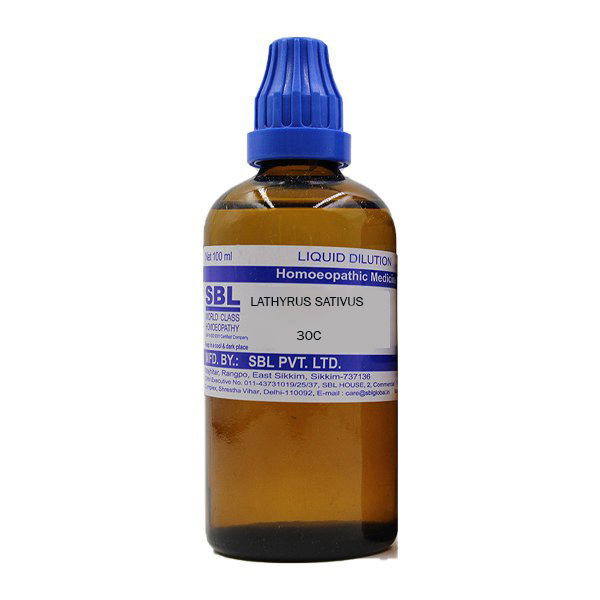
SBL Lathyrus Sativus 30C 100ml
You save ₹57
Inclusive of all taxes
- 100% genuine
- Sealed pack
- Secure payment
Delivery and returns
- Free delivery above ₹499For smaller orders the delivery charge is shown at checkout.
- Delivery dateEnter your pincode above to see when it will arrive.
- Easy returnsSee our returns and refunds policy.
- Need help?Chat with us on WhatsApp
Product details
SBL Lathyrus Sativus 30C is a 100ml homeopathic liquid dilution prepared from the grass pea. Homeopathic literature traditionally describes it for heaviness, stiffness and weakness of the legs, cramps and a tottering gait.
Introduction
SBL Lathyrus Sativus 30C 100ml is a homeopathic liquid dilution prepared from Lathyrus sativus, the grass pea or chickling vetch, a legume grown as a hardy crop in parts of South Asia, the Mediterranean and Africa. When eaten in large amounts over a long period as a staple food, the raw seed is known to harm the legs, which is how the remedy picture was first noted. In homeopathy the seed is diluted many times and potentised, so the finished product is a highly diluted remedy and not the seed or flour, and it should never be confused with food use of the pea.
The 30C potency of Lathyrus Sativus is a widely used lower strength that a physician may consider when leg stiffness and weakness are the recent, main complaints, always as the label or physician directs. In homeopathic materia medica, Lathyrus Sativus is a remedy of the legs. The classical picture is one of weakness and stiffness, with heavy, trembling legs, a stiff, dragging or tottering gait, and tightness in the calves and the backs of the knees. The upper body is described as much less affected, and the feeling is often of the legs being unwilling to follow the person’s wishes.
Key Benefits
In homeopathic literature, Lathyrus Sativus is traditionally associated with the following symptoms:
- Heaviness, weakness and stiffness of the legs, especially in the thighs and knees
- A stiff, tottering or dragging walk, with difficulty rising from a chair
- Cramping and tightness of the calf muscles, with a feeling of shortened tendons
- Trembling of the legs when standing, with a sense of insecurity on the feet
- Pains and numbness in the lower limbs that are worse in cold, damp weather
These are descriptions from traditional homeopathic sources and do not replace a medical diagnosis. Increasing leg weakness, numbness or difficulty walking needs prompt medical attention.
Composition
- Lathyrus Sativus 30C: traditionally used in homeopathy for weakness and stiffness of the legs, calf cramps and a tottering, stiff gait.
This is a single-ingredient dilution prepared from the grass pea according to standard homeopathic pharmacy methods, in a dispensing alcohol base. It is not a food product and not a pea extract.
Why Choose
SBL is a familiar Indian homeopathic manufacturer whose dilutions are available through many pharmacies and are named in many physicians’ prescriptions. Lathyrus is a remedy of narrow focus, which makes a clearly labelled single-remedy bottle a convenient choice for clinics.
- A single remedy, so the bottle holds one clearly named source
- A 100ml size that suits regular clinic dispensing
- Supplied in both 30C and 200C so you can choose the strength advised for you
- A remedy with a clear leg-centred picture rather than a broad, general one
How to Use
The way to take Lathyrus Sativus depends on the person and the strength, so read the label and follow it, or follow a registered homeopathic physician’s instructions. Homeopathic practice generally suggests taking remedies with an empty, clean mouth and avoiding strong flavours around the time of the dose. Keep the bottle shut tightly, out of the heat and away from light.
If walking becomes noticeably harder, or if you feel numb, do not wait to see whether the remedy helps; speak to a doctor first. Continue any prescribed medicines, and tell your physician about them before beginning.
FAQs
What is SBL Lathyrus Sativus 30C used for?
In homeopathic tradition it is used for heaviness, stiffness and weakness of the legs, calf cramps and a tottering walk.
Is the grass pea poisonous?
Eaten in large amounts as a main food, the raw seed can harm the nerves of the legs. This product is a highly diluted, potentised remedy and is not the raw seed, but it should not be used in place of medical advice for leg weakness.
Is this the same as eating peas or pea flour?
No. It is a homeopathic dilution and has no food use.
Which potency is right for me?
The number shows how far the remedy has been diluted. A registered homeopathic physician can recommend 30C or 200C for your case.
Does this product contain alcohol?
Yes. Liquid dilutions are alcohol based. Ask your physician if you avoid alcohol.
Safety Information & Precautions
- Use only as directed on the label or by a registered homeopathic physician.
- Do not exceed the directions you have been given.
- This is an alcohol-based liquid. Consult a doctor before use during pregnancy or breastfeeding, for children, or if you avoid alcohol.
- Tell your doctor about any ongoing medicines before using it.
- See a doctor for increasing weakness, numbness, loss of balance, trouble controlling the legs or any serious symptom.
- Never eat large amounts of raw grass pea as a staple.
- Keep out of reach of children and store in a cool, dry place.
Final Thoughts
SBL Lathyrus Sativus 30C 100ml is a homeopathic remedy of the legs, traditionally chosen when stiffness, heaviness and a tottering gait are the main symptoms. Choose the potency your physician advises, follow the label, and seek medical care without delay for anything progressive or serious.
If you are unsure whether this remedy fits your symptoms, or whether 30C or 200C is right, speak to a registered homeopathic physician before ordering.